For decades, property and casualty insurance operated on a purely reactive model. Something broke, burst, or caught fire, and the insurance company paid to rebuild or repair it. Today, that model is undergoing a massive transformation. High inflation, rising construction costs, and frequent extreme weather events have driven insurance premiums higher across the United States. In response, insurers and policyholders are embracing a new framework: Predict & Prevent. Instead of waiting for a disaster to trigger a complex claims process, modern insurance strategies focus on identifying risks early and stopping damage before it happens. By pairing modern sensor technology with smart policy enhancements, property owners can protect their investments while keeping annual insurance costs manageable. At Keats Insurance Agencies, our independent agents work closely with homeowners and business owners across New York, Florida, and the East Coast to build proactive risk management plans that lower premiums and prevent claims. Here is a breakdown of how the “Predict & Prevent” model works across residential and commercial properties, and how you can apply it to safeguard your asset portfolio.
Smart Home Defense: Stopping Catastrophic Water Claims
While major fires dominate news headlines, non-weather water damage is actually one of the most common and costly sources of property damage claims in residential real estate. Non-weather water damage and freezing account for roughly one-fourth of all homeowner insurance claims each year. Whether you manage a coastal home in Long Island, a residence in Orange County, NY, or a property in Sunny Florida, a small pinhole leak in an upstairs bathroom pipe can release hundreds of gallons of water in hours, ruining drywall, hardwood floors, and electrical systems before anyone notices.
High-Impact Prevention Technologies
Modern property protection relies on connected hardware that acts as a 24/7 digital security guard for your plumbing system:
-
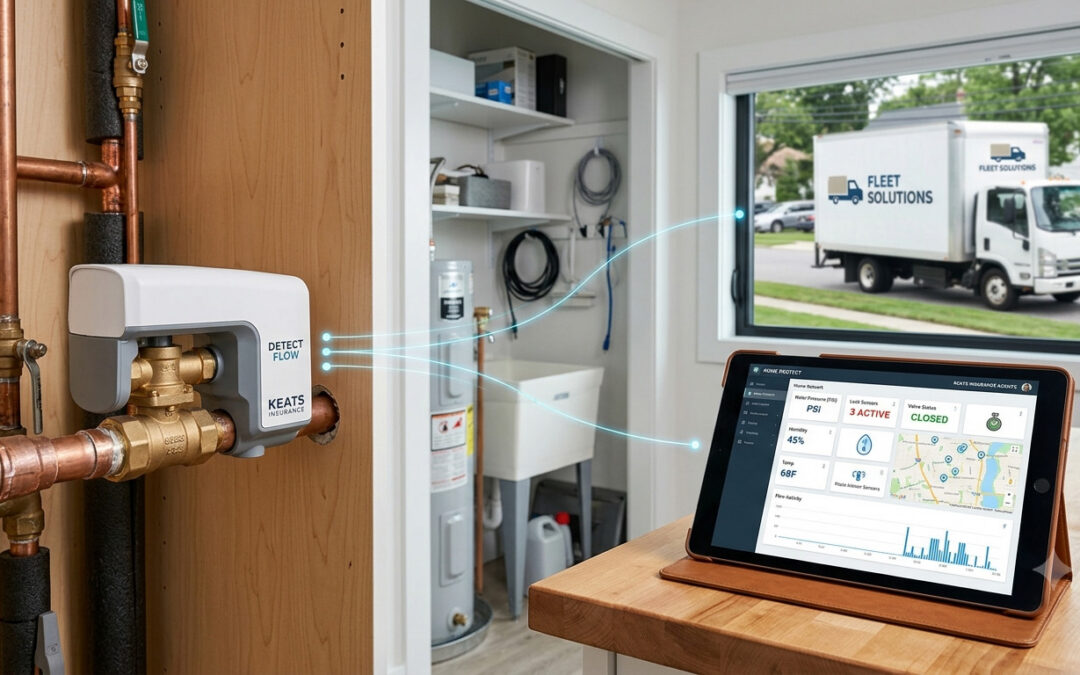
- Automatic Water Shut-Off Valves: Systems like Flo by Moen or Phyn monitor water pressure and flow rates through your main line. If the system detects a micro-leak or an abnormal continuous flow, it automatically shuts off the main water supply within seconds and sends an alert to your smartphone.
- Smart Freeze Sensors: Placed near vulnerable pipes, basements, or water heaters, these sensors alert property owners when ambient temperatures drop below a safe threshold, allowing action before pipes freeze and burst.
- Connected Sump Pump Monitors: Basements face significant risk during heavy rainstorms. Connected pump sensors monitor power supply, water levels, and pump motor health to prevent basement flooding.
Premium Savings and Deductible Avoidance
Installing smart water detection systems provides two distinct financial benefits:
-
- Direct Premium Discounts: Many national insurance providers offer discounts ranging from 3% to 10% on homeowners policies for verified automatic shut-off systems.
- Deductible and Nuisance Savings: Avoiding a $10,000 to $50,000 water restoration claim saves you from paying a high deductible out of pocket, avoids temporary displacement from your home, and prevents your loss history from pushing future premiums higher.
Uncovering Hidden Property Risks: Underground Service Line Coverage
Many property owners assume their standard homeowners insurance policy covers every pipe and wire on their parcel. In reality, standard policies generally stop coverage at the home’s exterior foundation. The underground utility pipes and wires running between the street main and your home (water lines, sewer pipes, electrical service lines, and natural gas lines) are the legal responsibility of the property owner. When an aging clay sewer pipe collapses under your front yard due to tree root intrusion or soil freezing, excavation and line replacement costs typically range from $3,000 to $12,000. Standard homeowners insurance policy forms usually exclude this damage as normal wear and tear or utility line degradation.
The Solution: Service Line Endorsements
To address this major coverage gap, insurers now offer Service Line Coverage as a low-cost policy add-on or endorsement. While a standard homeowners policy offers $0 in coverage for utility lines running outside your foundation, a service line endorsement expands protection to include underground water, sewer, electrical, natural gas, and telecommunications lines. It also covers common real-world hazards that basic policies ignore, such as wear and tear, rust, tree root damage, and ground freezing. Adding this protection is remarkably affordable, typically costing between $20 and $50 per year. In exchange, policyholders gain up to $10,000 per occurrence to pay for pipe repair, site excavation, and landscape restoration, usually subject to a low, separate deductible of around $500 instead of your main home deductible. Adding a service line endorsement ensures that if an underground line leaks or collapses, the recovery costs are covered under a manageable, predictable fee structure.
Commercial Safety Integration: Fleet Telematics and Risk Management
The “Predict & Prevent” shift is equally transformational for commercial operations, particularly businesses managing vehicle fleets along the East Coast. Rising vehicle replacement costs and elevated litigation settlements have driven commercial auto liability rates upward across the logistics and service sectors. To keep coverage affordable, fleet operators are integrating real-time telematics devices into their daily operations.
How Telematics Works in Practice
Telematics hardware plugs directly into a vehicle’s OBD-II port or connects via integrated dash cams to capture actionable driving data:
-
- Speeding and Acceleration Trends: Highlights excessive speeding or aggressive driving habits that increase collision probability.
- Hard Braking and Cornering Events: Identifies sudden stops or erratic turns that indicate tailgating or distracted driving.
- Route Efficiency and Idle Time: Tracks routing metrics to reduce driver fatigue and fuel usage.
Strategic Benefits for Commercial Policyholders
Driver behavior remains a primary factor in the vast majority of commercial motor collisions. By utilizing telematics data, businesses can implement targeted driver training programs. Insurers reward this proactive management by offering tiered premium discounts based on fleet safety scores. Furthermore, telematics provides indisputable video and sensor evidence during accident investigations, helping companies avoid fraudulent personal injury claims and costly legal disputes.
How to Implement a Predict & Prevent Strategy Today
Moving from a reactive insurance posture to a proactive prevention model takes just a few steps:
-
- Audit Property Vulnerability Points: Check your water heater age, inspect basement sump pumps, and locate your main water shut-off valve. If your home water heater is older than 10 years, install a local leak sensor or schedule proactive replacement.
- Review Utility Responsibilities: Contact your water and electrical utilities to understand where municipal responsibility ends and personal responsibility begins. Consider adding a service line rider to your home insurance policy.
- Inquire About Sensor Programs: Contact your Keats Insurance agent to ask if your carrier partners with smart home hardware manufacturers. Many insurers provide free or discounted leak detection hardware to policyholders.
- Leverage Commercial Fleets: If you run a business with vehicles, evaluate telematics providers that integrate directly with commercial insurance underwriting programs to secure immediate rate credits.
Frequently Asked Questions
What does “Predict & Prevent” mean in the insurance industry?
“Predict & Prevent” refers to an insurance framework that uses smart technology, real-time data, and risk mitigation strategies to stop losses before they occur, rather than only paying claims after a loss happens.
Will installing a smart water leak detector reduce my homeowners insurance premium?
Yes, many major property insurance companies offer discounts between 3% and 10% on your annual policy premium when you install a verified automatic water shut-off valve system.
What is service line coverage, and do I need it?
Service line coverage is an optional homeowners insurance endorsement that covers the repair or replacement of underground utility pipes (like water, sewer, and gas lines) on your property. Standard policies exclude these pipes, making this coverage essential to avoid unexpected out-of-pocket excavation costs.
How does telematics lower commercial auto insurance rates?
Telematics devices track driving behavior such as speed, braking, and cornering. Insurance carriers offer discounts to fleet operators who use this data to improve driver safety, reduce accidents, and minimize claim severity. Ultimately, the transition toward a “Predict & Prevent” model represents a win-win for both policyholders and insurers. By taking advantage of smart home monitoring technology, targeted policy endorsements like service line coverage, and data-driven solutions like fleet telematics, you may proactively eliminate hazards before they turn into major claims. Embracing these tools shields your property from catastrophic disruptions, keeps unexpected out-of-pocket expenses to a minimum, and gives you the leverage needed to stabilize your insurance costs over the long term.
Protect Your Home & Business with Keats Insurance Agencies
Ready to upgrade your insurance coverage with modern loss-prevention strategies? The local agents at Keats Insurance Agencies are here to review your current policy, identify coverage gaps, and help you unlock smart technology discounts. Licensed across: New York, Florida, and the US East Coast New York Offices: Serving Mineola, Baldwin, Florida (NY), Nassau County, Suffolk County, NYC, and Hudson Valley| Florida & Regional Services: Serving Fort Myers, FL, and communities along the East Coast
📞 Call Us: (800) 871-1992
📧 Email: service@keatsagency.com
🌐 Online: Contact Keats Insurance Agencies to Request a Quote Today