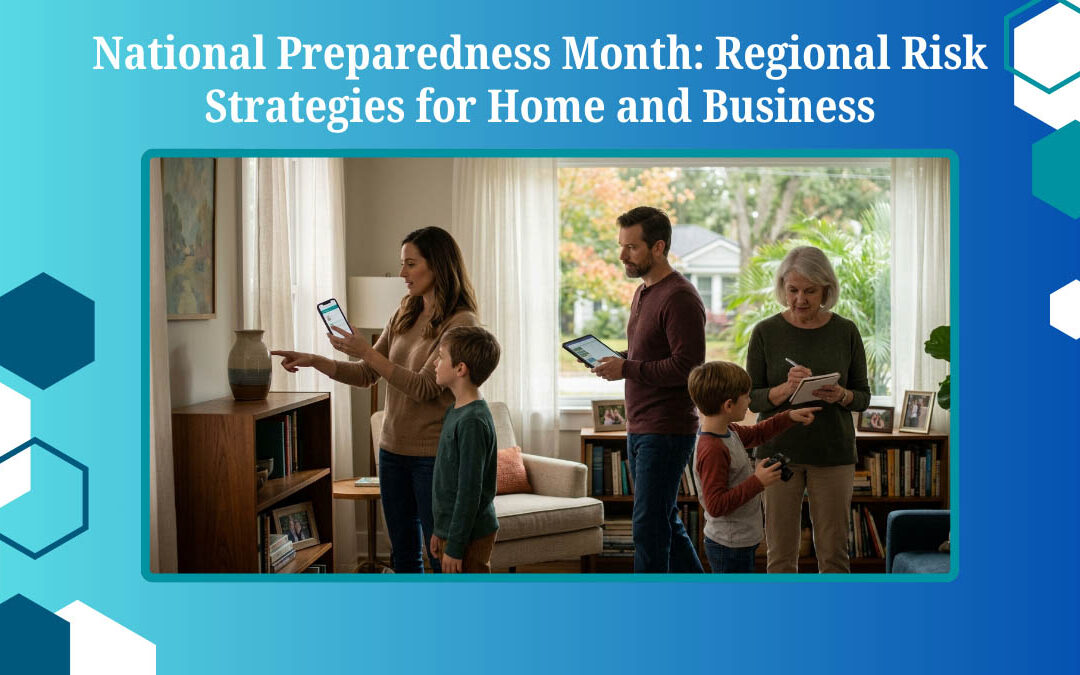
September marks National Preparedness Month across the United States. It serves as a natural reminder for homeowners and business operators to evaluate physical readiness and review financial protections before unexpected severe weather strikes.
Risk exposure depends heavily on geographic location. A property owner managing a commercial building in New York faces vastly different seasonal hazards than a business operating in south Florida. Conducting a targeted national preparedness month insurance review helps align your coverage limits with the specific risks of your region.
Why September Is Critical for Disaster Planning
September sits at a major weather transition point. In the Atlantic basin, September represents the peak of hurricane season. At the same time, northern states transition into colder autumn months, setting the stage for early freezing rain, heavy coastal storms, and rapid seasonal shifts.
Proactive policy reviews during September allow individuals and commercial operations to identify gaps, update structural valuations, and select critical policy endorsements before severe weather events cause irreversible losses.
Northeastern Regional Risks: Freeze, Coastal Storms, and Heavy Snow
Homeowners and business leaders across East Coast navigate complex seasonal changes. Autumn preparation rapidly gives way to winter weather management.
Preventing Freeze Damage and Ice Dams
Rapid freeze-thaw cycles present severe structural challenges. Uninsulated plumbing pipes can burst under extreme pressure, releasing hundreds of gallons of water into interior spaces within hours. Additionally, ice damming along roof lines prevents melting snow from draining properly, pushing water upward beneath shingles and causing interior ceiling collapses. Keeping building schedules accurate ensures structural repairs and water damage remediation remain fully protected.
Managing Nor’easters and Snow Load on Roofs
Nor’easters bring a dangerous combination of high winds, freezing precipitation, and extreme snow accumulation. Heavy ice and snow loads strain structural framing on both residential roofs and wide-span commercial facilities. Property owners must verify that their structural replacement limits reflect actual current reconstruction costs rather than historic valuations.
Addressing Inland and Coastal Flooding Hazards
Low-lying coastal regions along Long Island, coastal Connecticut, and New Jersey frequently encounter storm surges from Atlantic systems. Further inland, river basins across Pennsylvania face heavy runoff from seasonal downpours.
A common misstep involves assuming standard property insurance covers water damage from rising tides. Standard home policies exclude flood damage entirely. Comprehensive protection requires a standalone policy backed by the National Flood Insurance Program (NFIP) or private market flood providers.
Florida Regional Risks: Hurricanes, Windstorms, and Extended Outages
Florida policyholders must maintain heightened vigilance throughout late summer and early autumn. Managing severe tropical weather requires clear understanding of specialized policy terms.
| Deductible Type | How It Works |
| Standard Property Deductible | Fixed dollar amount (e.g., $1,000 or $2,500). Applies per claim event. |
| Florida Hurricane Deductible | Percentage-based (typically 2%, 5%, or 10%). Calculated from total insured structure value. |
Navigating Percentage-Based Hurricane Deductibles
Unlike fixed dollar deductibles common in northern states, Florida property policies frequently incorporate percentage-based hurricane deductibles. These range from 2% to 10% based on the total insured replacement value of the dwelling.
For example, a home insured for $500,000 with a 5% hurricane deductible requires a $25,000 out-of-pocket contribution before coverage activates. Reviewing these percentage options during September prevents financial surprises after a major storm.
Separating Windstorm Coverage from Water Ingress
Tropical systems generate two distinct perils: violent wind gusts and rising surface waters. Windstorm options cover structural losses caused by direct atmospheric force, such as torn roof trusses or shattered windows. However, storm surge and land surface flooding require separate flood insurance protection. Securing both ensures complete financial defense across all weather scenarios.
Protecting Revenue During Extended Power Grid Outages
Major hurricanes routinely damage public utilities, knocking out electrical grids and municipal water supplies for extended periods. For businesses, forced closures due to off-premises utility failures can destroy quarterly revenues. Adding utility service disruption endorsements to commercial property coverage safeguards operational income during widespread regional grid failures.
Personal Lines Checklist: Safeguarding Home, Auto, and Assets
Preparing your household for unforeseen emergencies involves managing both physical property and financial documentation.
-
- Update Replacement Costs: Rising material costs and recent renovation projects increase construction valuations. Review policy limits to match current market conditions.
- Document Household Belongings: Create a complete digital inventory of high-value belongings, furniture, and electronics. Store high-resolution photos and receipts in secure cloud storage to streamline future claims.
- Manage Seasonal Homes: Properties left unoccupied during seasonal transitions require tailored endorsements to cover vacancy risks and unmonitored utility failures.
- Review Comprehensive Auto Coverage: Verify that vehicles, boats, and utility trailers feature active comprehensive coverage to protect against falling limbs, flying debris, and flood waters.
For additional emergency kit resources and household planning templates, review official guides provided by FEMA Ready.gov.
Commercial Lines Checklist: Maintaining Business Continuity
Operational readiness protects structural real estate, business equipment, and long-term business survival.
-
- Perform Business Interruption Audits: Determine whether your existing insurance covers lost revenue, ongoing payroll, and relocation expenses if a physical loss forces a temporary shutdown.
- Review Machinery Schedules: Confirm that new commercial equipment, computers, and heavy machinery appear accurately on your property schedule.
- Address Combined Cyber and Physical Hazards: Power outages caused by physical weather often disrupt security systems and digital operations. Pairing physical property coverage with cyber liability options ensures complete resilience.
- Establish Emergency Protocols: Maintain digital copies of employee rosters, vendor contact lists, and insurance policy details for rapid access during evacuation orders.
Frequently Asked Questions
Why is September designated for insurance reviews during National Preparedness Month?
September coincides with peak hurricane activity in southern states and immediately precedes winter conditions in northern states. Conducting reviews during September gives property owners time to correct coverage gaps and update deductible structures before peak regional hazard events occur.
Does standard homeowners insurance cover rising flood waters in the Northeast or Florida?
No. Standard homeowners policies across New York, New Jersey, Virginia, Connecticut, Vermont, Pennsylvania, and Florida exclude flood damage resulting from heavy surface rainfall, overflowing riverbanks, or coastal storm surge. Flood safety requires a standalone flood insurance policy.
How does a Florida hurricane deductible differ from a standard deductible?
A standard deductible is a fixed dollar amount applied per incident. A Florida hurricane deductible is a percentage amount (typically 2% to 10%) calculated using the overall insured replacement value of the home, applying specifically during named tropical events.
How does business interruption coverage protect severe weather operations?
Business interruption coverage replaces lost operational income, maintains payroll obligations, and covers ongoing fixed overhead if a covered weather event physically prevents your business from operating.
Protect Your Property with a Coverage Review
National Preparedness Month highlights the value of proactive financial planning. Whether you manage a residential home in Connecticut, operate a commercial facility in New York, or protect seasonal real estate in Florida, inspecting policy details before extreme weather occurs remains essential.
Connect with our experienced insurance advisors to review property values, examine deductible structures, and address coverage gaps tailored to your region.
Call Us: (800) 871-1992
Email: service@keatsagency.com
Online: Request an Insurance Quote